Form
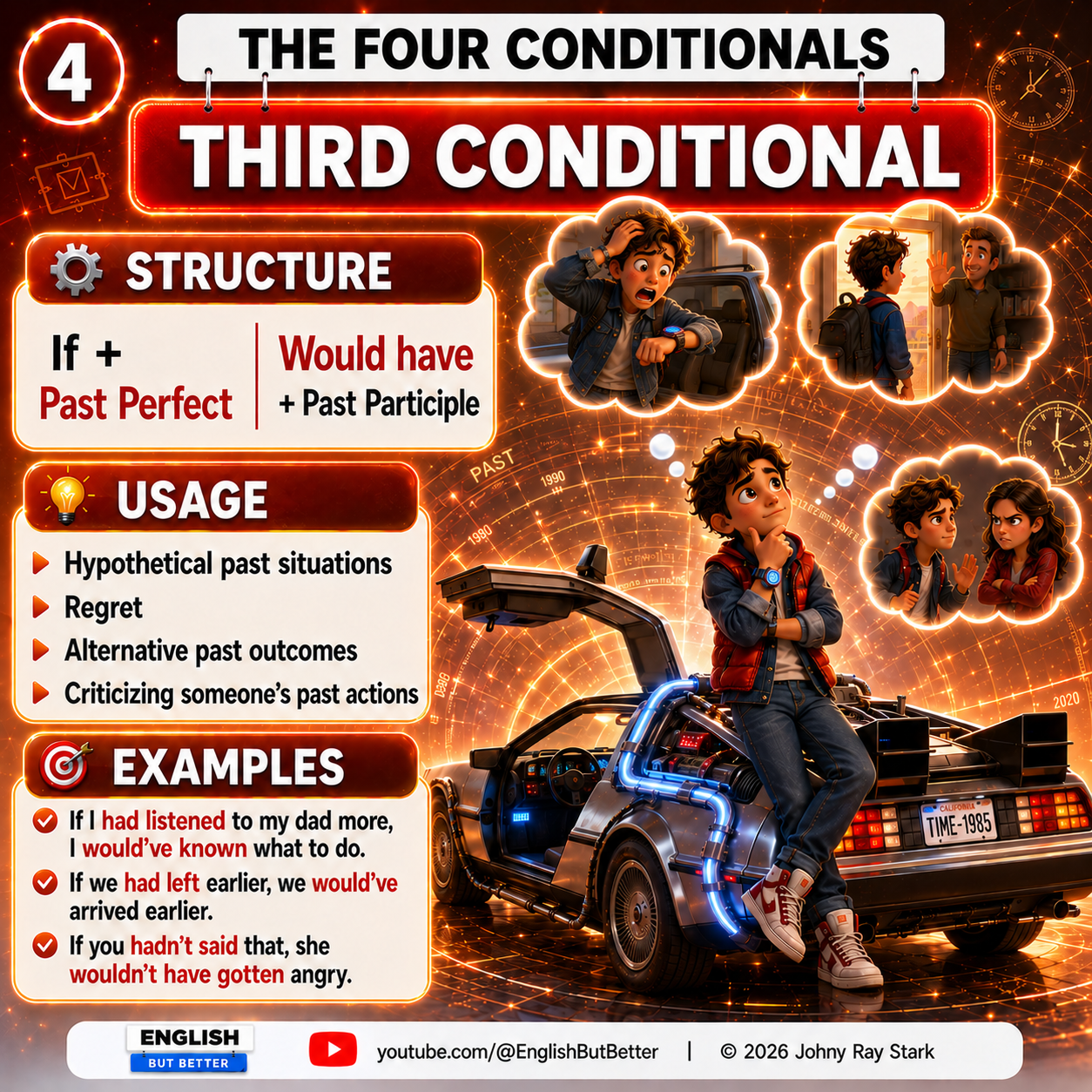
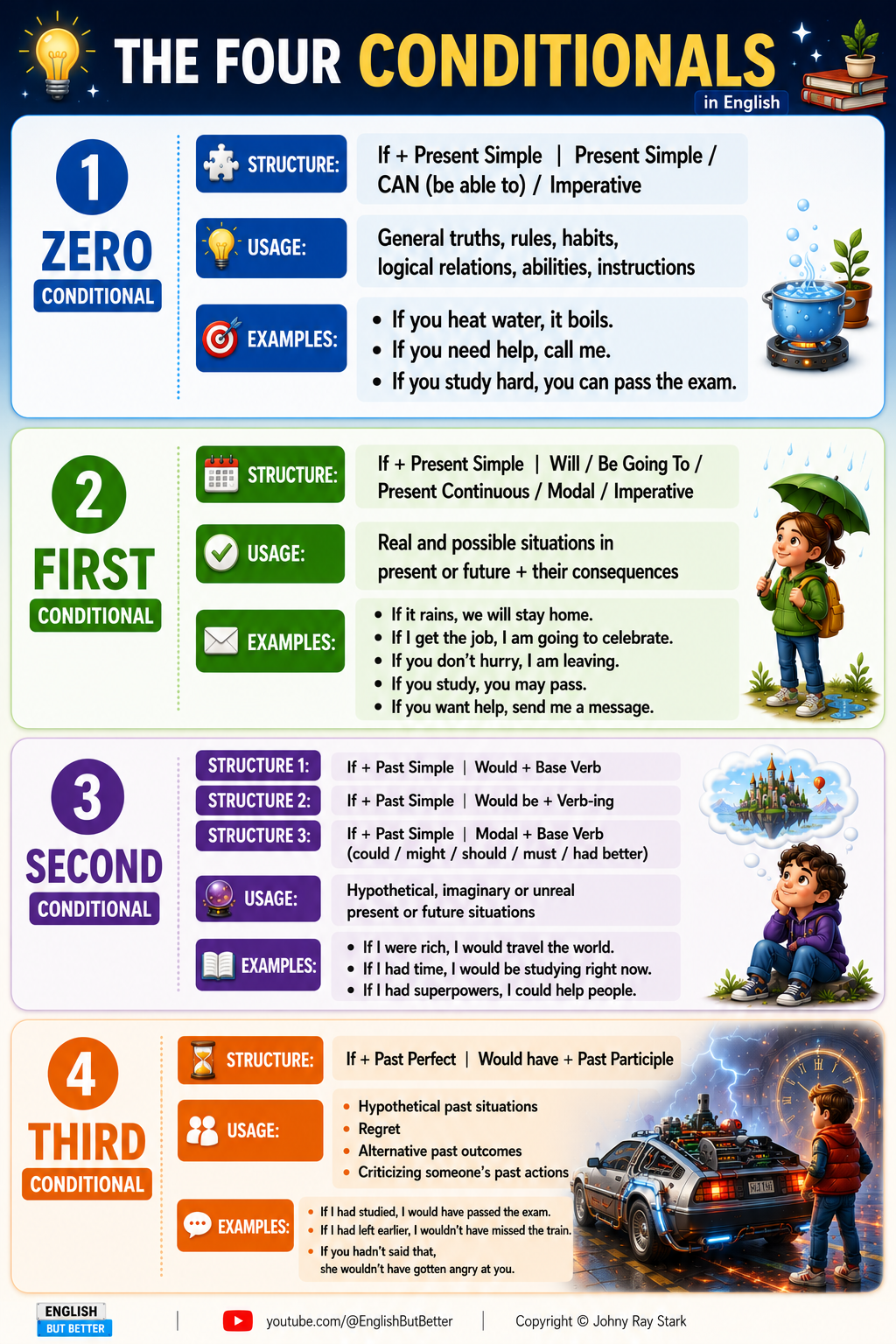
Formula: If + past perfect, would have + past participle
| If clause (unreal past condition) | Main clause (imagined past result) |
|---|---|
| If I had studied harder, | I would have passed. |
| If she hadn't been late, | she would have got the job. |
| If it had rained, | we wouldn't have gone out. |
| If they had left earlier, | they would have caught the train. |
Never use would in the if clause:
✓ "If I had known, I would have come." ✗ "If I would have known…"
'd = had or would?
In the if clause, 'd = had: "If I'd known…" (= If I had known). In the main clause, 'd = would: "I'd have come" (= I would have come).
Use
The third conditional talks about imaginary situations in the past. The condition did NOT happen — we are imagining what the result would have been.
| Use | Example |
|---|---|
| Hypothetical past situations | If dinosaurs hadn't gone extinct, the world would have looked very different today. |
| Regret about the past | If I had saved more money, I would have bought a house. (I didn't save — I regret it) |
| Alternative past outcomes | If she had taken the other job, she would have been happier. |
| Criticizing someone's past actions | If you hadn't been so careless, this wouldn't have happened. |
Second vs Third Conditional
| Second Conditional | Third Conditional |
|---|---|
| Hypothetical present/future | Hypothetical past |
| If I had time, I would help. (I don't have time now) |
If I had had time, I would have helped. (I didn't have time then) |
| If she lived here, she would walk to work. | If she had lived here, she would have walked to work. |
Exercises
Choose the correct third conditional form.
1. If I ___ the map, we wouldn't have got lost.
2. She would have got the job if she ___ better at the interview.
3. If they hadn't missed the flight, they ___ on time.
4. ___ about the problem, he would have fixed it immediately.
5. We would have come to the party if you ___ us.