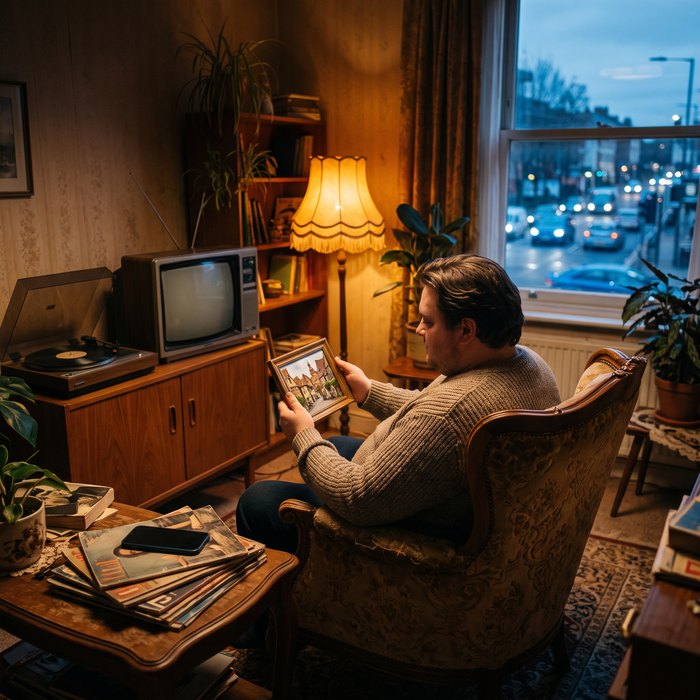
People sometimes describe themselves as nostalgic for a time they never experienced. They miss the elegance of old train journeys, the intimacy of neighbourhood shops, or the supposed simplicity of life before everyone carried a phone. Yet their memories may have been assembled from films, photographs, family anecdotes, and advertisements rather than from personal experience.
This is not necessarily a contradiction. Nostalgia has never been a perfectly reliable record of the past. Even people recalling their own childhood tend to preserve selected moments while allowing inconvenience, conflict, and boredom to fade. When the past belongs to someone else's story, the editing process becomes easier still. We can keep the beautiful clothes, the handwritten letters, and the long conversations, while quietly excluding the limited choices and social restrictions that shaped everyday life.
Imagined nostalgia can also serve a present need. Someone overwhelmed by constant notifications may long for an era in which communication appeared slower and more deliberate. They may not actually want to live without modern medicine, reliable heating, or instant access to information. What they want is a feeling of attention and continuity that they associate with an idealised past. The historical setting is often a container for a contemporary desire.
Popular culture makes this process particularly powerful. A carefully lit film scene can turn an ordinary kitchen into a symbol of family closeness. A vintage advertisement can suggest that people once bought fewer things and valued them more, even when the advertisement itself was designed to persuade them to consume. Repetition gives these images familiarity, and familiarity can begin to feel like memory.
There is a risk in treating such longing as evidence that the past was objectively better. Idealised memories can make the present seem uniquely shallow or broken, while obscuring the people who had fewer freedoms or opportunities in earlier periods. The imagined past becomes a standard that real life cannot meet, partly because the standard was never real in the first place.
Still, it would be a mistake to dismiss this form of nostalgia as mere ignorance. It can reveal what people feel is missing now: slower rhythms, stronger local ties, durable objects, or spaces where attention is not constantly divided. The useful question is not whether the remembered world ever existed exactly as imagined. It is which of its qualities are worth rebuilding in the world we actually inhabit.
We cannot return to a past that was partly invented. But we can recognise the needs hidden inside the longing and decide whether they can be met without borrowing history's flattering filter.
Fiction note: All people, places and events in this text are fictional.