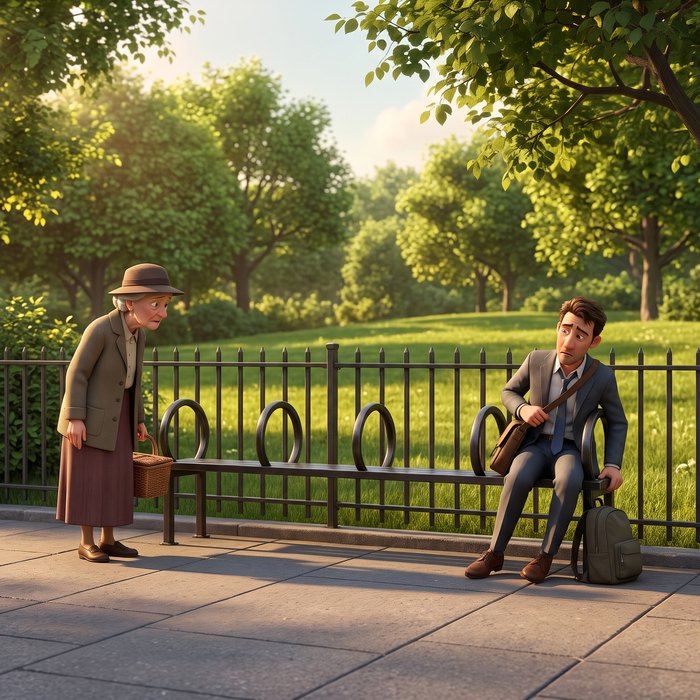
The new Riverside Gardens looks inviting from the entrance. There are trees, flower beds, a fountain, and carefully arranged benches. Yet visitors soon discover that sitting is permitted, provided nobody sits for too long or in the wrong position.
The benches are made of cold metal and divided by raised armrests placed so close together that lying down is impossible. Some seats slope forward slightly, encouraging visitors to get up rather than settle in. The design is subtle enough to escape official descriptions, which speak instead of durability, cleanliness, and efficient use of public space.
Defenders of this approach argue that public furniture must serve everyone. Benches should resist damage, remain easy to clean, and discourage behaviour that makes other visitors uncomfortable. These are not unreasonable aims. A park is shared space, and maintenance budgets are not unlimited.
The difficulty begins when design quietly decides which visitors deserve to stay. An older person who needs a longer rest, a parent feeding a baby, or someone with nowhere else to go may experience the same bench very differently. A small metal divider can be an inconvenience to one person and a physical barrier to another.
The city insists that nobody is being excluded. Technically, that is true. The gates remain open, and anyone can enter. But access is not simply the ability to cross a boundary. It also involves being able to use a place without unnecessary discomfort or humiliation.
There is an irony in creating a park that discourages people from enjoying the very thing parks traditionally offer: time. If every seat is designed for a brief pause, visitors become passing customers rather than members of a shared public environment. The park may look tidy in photographs while losing much of its social purpose.
None of this means every bench should become a bed or that safety concerns should be dismissed. Better design can accommodate different needs without abandoning maintenance or common rules. Comfortable seating, accessible paths, and clear expectations are not extravagant demands.
The real question is whether public furniture should solve problems by making public life less comfortable for everyone. A park is not a hotel, but neither should it resemble a corridor through which people are expected to keep moving. If the only welcome offered is permission to enter, the city has confused an open gate with genuine hospitality.
Fiction note: All people, places and events in this text are fictional.