The right way to describe places
Can you describe your town or city in English? Many students only say a place is small, beautiful or interesting — but a good description needs more than a few adjectives. This page teaches you three simple steps to describe any place clearly, whether in everyday conversation or an official exam.
The goal is not to memorise sentences, but to learn how to think about a place and describe it in your own words.
Imagine someone tells you:
"I'm from Zaragoza. Do you know it? Describe it to me."
A weak answer:
"It's small, beautiful, and I like it."
What's missing? We don't know where Zaragoza is, what it looks like, what makes it different, or what life is like there.
A good description starts before you speak or write. You need to think about the place, find interesting details, and organise your ideas.
Three simple steps:
1Brainstorm
Brainstorm
Before you speak or write, imagine you are showing someone your town or village. Write ideas in any order — you will put them in the right order in the next step. Not every place needs all four categories — use whichever ones fit.
Place (location, landmarks, general character)
- Small town
- In the north of the country
- Near a large river
- Flat land
- Many green areas
- No shopping mall
- One small cinema
- Two parks
- No large sports centre
- Many small shops
Think about the people
- Friendly
- Helpful
- People know their neighbours
- Hard-working
- Hospitable
- Selfish
- Superstitious
- Traditional
- Rude to foreigners
Think about traditions and culture
- Summer festival
- Traditional music
- Local market every Sunday
- Halloween
- Hanukkah
- St Patrick's Day
- Christmas
- Tailgate parties
- Kissing elders' feet
- Arranged marriages
- Leave shoes at the entrance
- Don't talk at the table
Think about the food
- Traditional food
- Fresh fish
- Small family restaurants
- Spicy
- Oily
- Mainly seafood
- Lots of pasta
- European-style
Tip: these are just example ideas to practise with. When you describe real people or places, use words like "some/many/most people" instead of talking about a whole country as if everyone is the same.
2Organise
Organise
We recommend organising your ideas in this order — Place → People → Traditions and culture → Food — and here is why:
- Place first — it's an effective method to set the scene before anything else, so your listener has a clear picture of the place from the start.
- People second — people are a big part of what makes a place special, so it works well to describe them early.
- Traditions and culture third — culture and traditions come from people, so it's effective to describe them right after the people.
- Food last — food is one part of a culture, so it works well as the last, most specific detail.
The goal is to order the ideas by hierarchyAn order of levels, from the broadest to the most specific. Place first sets the scene; people come next because they shape a place's character; traditions and culture follow from the people; food is the most specific detail, so it comes last., not by level of detail.
Place
- Small village
- On the coast
- White houses near the beach
- Narrow streets
Uncle lives farToo many dogs
People
- Friendly people
- Welcoming to visitors
Traditions and culture
- Summer fishing festival
- Boat races
Food
- Fresh fish
- Small seaside restaurants
Smelly
Crossed-out ideas are examples of notes you might discard in this step — not interesting or useful enough to include in the final description.
3Compose
Compose
Once you have the right order and the details to speak about — Place → People → Traditions and culture → Food — use these starters and these connectors. The result should look like this:
Starters
- I live in a small town...
- My hometown is a large city...
- I'm from a village...
- It is in the north · south · east · west of the country.
Connectors
Add another idea.
"There are two parks and a small cinema."
Add another idea, often about a new topic.
"Apart from that, the food there is amazing."
Show a difference.
"Most towns have a shopping mall, but my town doesn't."
Give a reason.
"The town is very quiet because there aren't many cars."
From Notes to Sentences
Here are some of the notes from Brainstorm, turned into full sentences — this is how the Result below was built:
| Notes | Full sentence |
|---|---|
| Small town · In the north of the country · Near a large river | I'm from a small town in the north of the country. It is near a large river. |
| Two parks · One small cinema · No shopping mall | There are two parks and a small cinema, but my town doesn't have a shopping mall. |
| Friendly · Helpful · People know their neighbours | The people are friendly and helpful, and they know their neighbours. |
| Summer festival · Local market every Sunday | There is also a summer festival with traditional music. There is a local market every Sunday too. |
| Traditional food · Fresh fish · Small family restaurants | Apart from that, the small family restaurants serve traditional dishes and fresh fish. |
Result
"I'm from a small town in the north of the country. It is near a large river. There are two parks and a small cinema, but my town doesn't have a shopping mall. The people are friendly and helpful, and they know their neighbours. There is also a summer festival with traditional music. There is a local market every Sunday too. Apart from that, the small family restaurants serve traditional dishes and fresh fish. My town is small and quiet, and life there is peaceful."
Useful Vocabulary
Go beyond basic words like "nice" or "big". First, some ready-to-use phrases. Then, a list of adjectives for your level.
Useful phrases
- The most recognisable landmark is... (a landmark = a building or place that is easy to recognise and important to a town or city) — The most recognisable landmark is the old stone bridge in the centre.
- The signature dish is... (a signature dish = the food a place is especially known for) — The signature dish is a spicy fish stew with fresh bread.
- It's famous for... — The town is famous for its colourful houses by the river.
- Stand out (to stand out = to be easy to notice because it is different from the rest) — The bright red roof really stands out among the grey buildings.
- Date back (to date back = to have existed since a particular time in the past) — The old castle dates back to the fifteenth century.
- Popular with tourists — The old town is popular with tourists because there are many souvenir shops.
Adjectives
| Word | Meaning | Example |
|---|---|---|
| Polluted | Dirty, with harmful substances in the air or water. | The air near the factory is polluted and grey. |
| Noisy | Full of loud sounds. | The street market is noisy, with vendors shouting all day. |
| Alive | Full of energy and activity; lively. | The city centre feels alive on a Saturday night. |
| Amazing | Very impressive or surprising (a strong, everyday word). | The view from the hill is amazing. |
| Beautiful | Very pretty to look at. | It's a beautiful village surrounded by mountains. |
| Bright | Full of light or strong colour. | The houses are painted in bright colours. |
| Calm | Peaceful and relaxed, without much noise or activity (for water, it means very little movement). | The lake is calm in the early morning. |
| Colourful | Having many bright colours. | The market stalls are colourful and full of fresh fruit. |
| Crowded | Full of people. | The beach gets very crowded in the summer. |
| Different | Not the same as others. | Every neighbourhood in the city feels different. |
| Dry | With little or no rain or water. | The countryside is dry and brown in summer. |
| Fresh | Clean and pleasant (for air); recently made or caught, not old (for food). | The air in the mountains is fresh and clean. |
| Hot | With a high temperature. | The desert town is extremely hot in the afternoon. |
| Incredible | Very impressive, hard to believe (even stronger than "amazing"). | The mountain view is incredible. |
| Interesting | Making you want to know more. | The old town has many interesting buildings. |
| Modern | Using present-day styles, ideas or technology; not old-fashioned. | The business district is full of modern glass towers. |
| Ancient | Very old, from a long time ago. | The ruins are ancient, built thousands of years ago. |
| Impressive | Making you admire it. | The size of the stadium is impressive. |
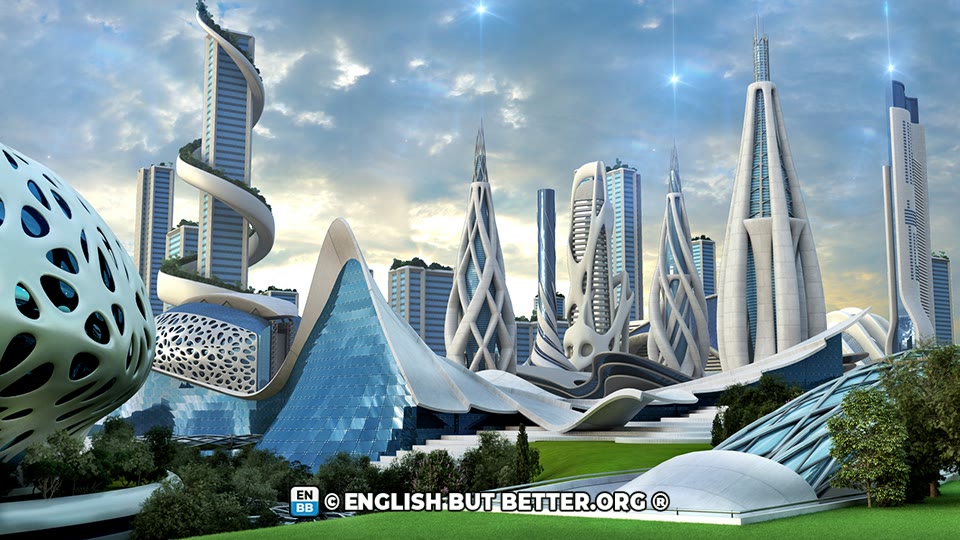
| Futuristic | Looks like it is from the future. | The glass towers in the business district look futuristic. |
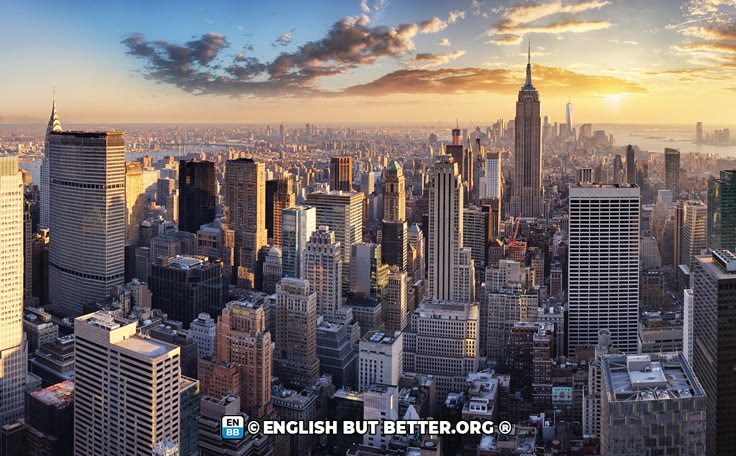
| Cosmopolitan | Full of people and influences from many countries. | It's a cosmopolitan city, with restaurants from all over the world. |
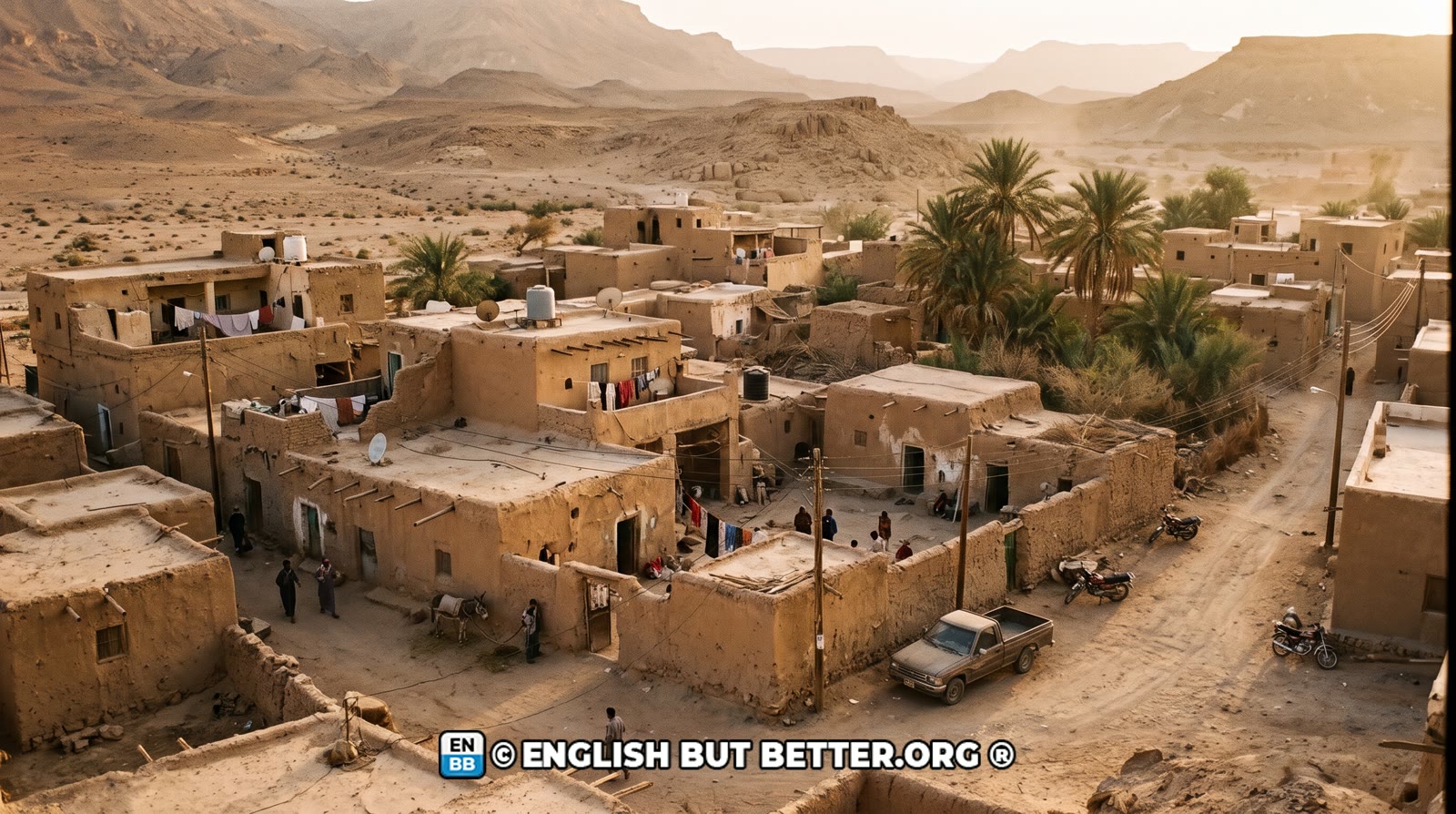
| Isolated | Far away from other places. | The village is isolated, with no other towns nearby. |
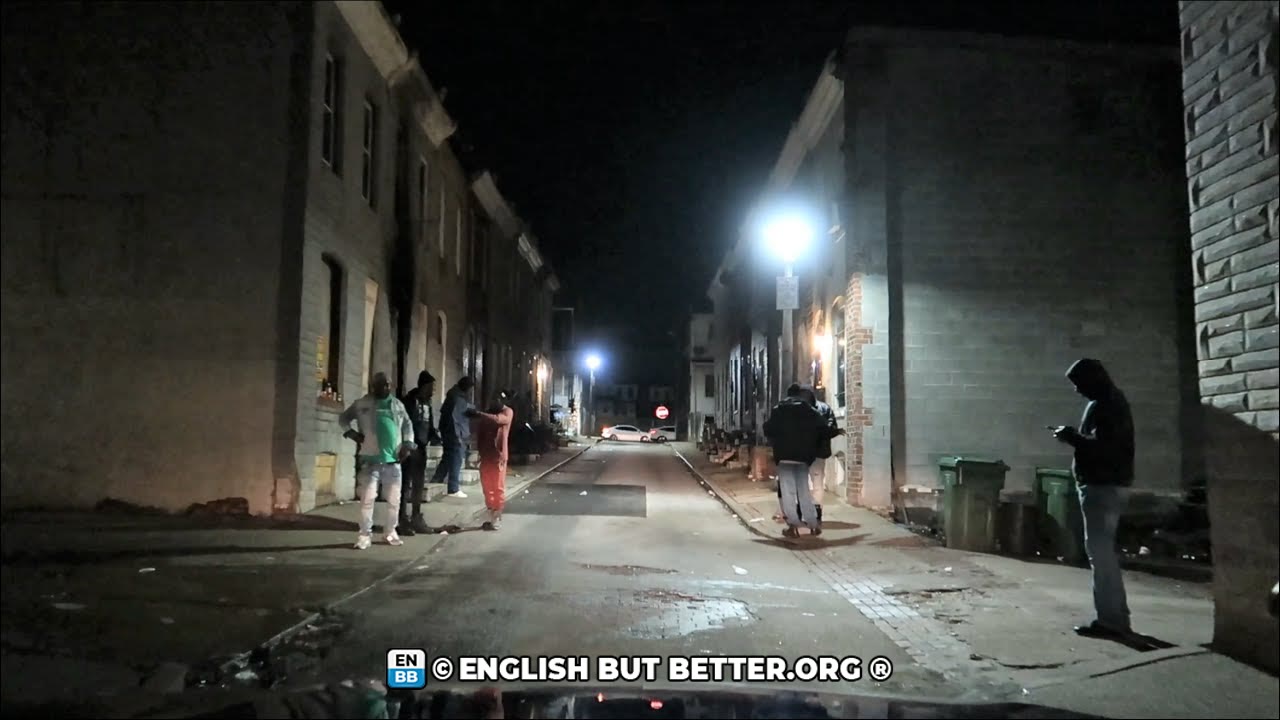
| Shadowy | Full of shadows, hard to see clearly. | The alley looks shadowy and quiet after dark. |
| Grimy | Covered in dirt. | The old walls are grimy and covered in dust. |
| Towering | Extremely tall. | Towering skyscrapers line both sides of the street. |
Page 1 of 3