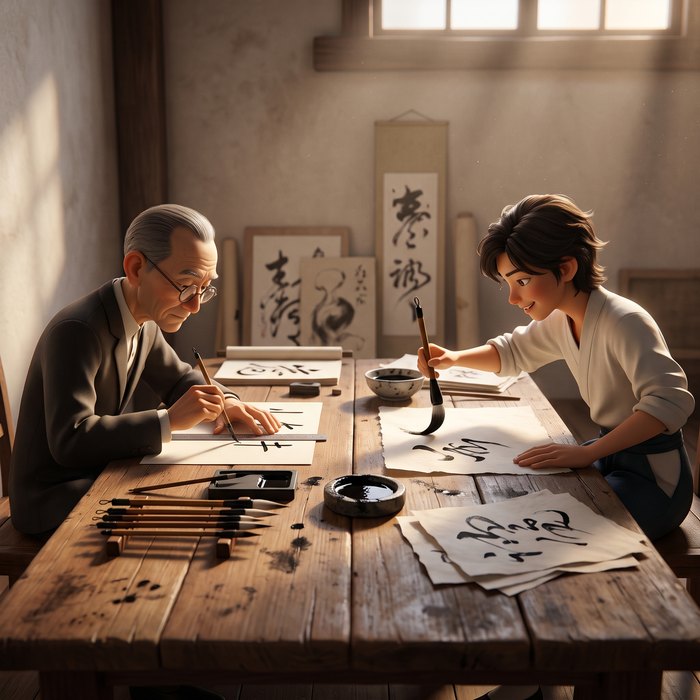
Mara: You've tilted the final line again.
Ivo: I've allowed it to breathe.
Mara: It's a commission for a legal archive, not a poem about weather.
Ivo: Even a legal archive has to look at the page. The words may be fixed, but the hand that gives them form isn't a machine.
Mara: The hand is why discipline matters. One careless stroke can turn elegance into noise.
Ivo: Too much discipline can make every line look measured by someone afraid to leave a fingerprint.
Mara: Clients pay us for control. They want letters to remain recognisable, balanced, legible.
Ivo: They also want them to feel handmade. Otherwise, they could print them.
Mara: You use that argument whenever a letter wanders into the margin.
Ivo: And you invoke legibility whenever a line surprises you.
Mara: Surprise isn't automatically a virtue.
Ivo: Nor is consistency. Your work is beautiful, but I can predict the next stroke before you make it.
Mara: Predictability builds trust. Readers shouldn't have to solve a puzzle before reading a name.
Ivo: Agreed. But there's a difference between making a word legible and making it lifeless.
Mara: You speak as if I've never taken a risk.
Ivo: I've seen your early work. You took risks then. Your current pieces seem designed to prevent disapproval.
Mara: Perhaps I learned that a commission isn't a private diary. People pay for something they can use.
Ivo: Fair. And perhaps I mistake my preferences for courage.
Mara: That's the first sensible thing you've said all morning.
Ivo: Careful. If you compliment me, I'll assume you've accepted the tilted line.
Mara: I'll accept it if you show me that the tilt guides the eye rather than merely announcing your personality.
Ivo: And I'll straighten it if you show me that the balance improves the word rather than just calming your nerves.
Mara: Then we agree on one thing.
Ivo: That neither of us is entirely right?
Mara: That the page deserves better than either of us winning.
Fiction note: All people, places and events in this dialogue are fictional.