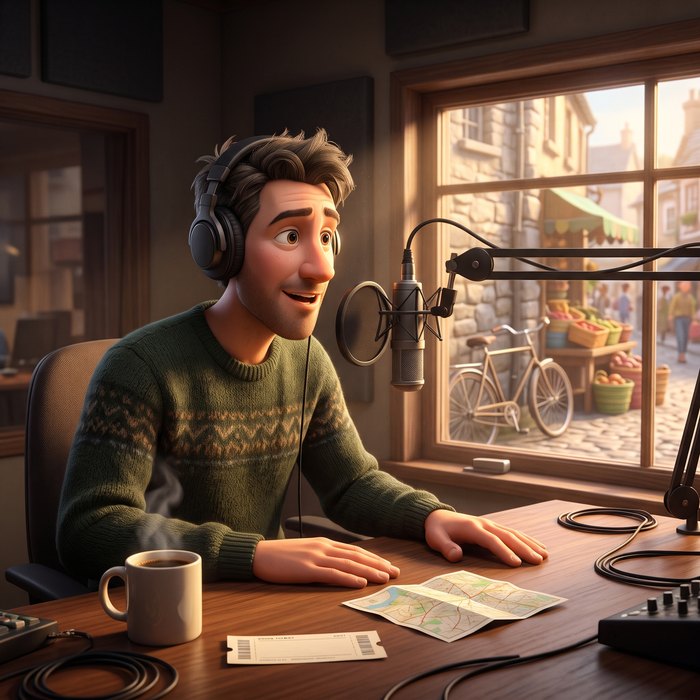
HOST: Welcome back to The Open Road, the podcast about seeing more by rushing less. Today, we're talking about slow travel. It isn't simply travelling slowly between destinations. It's about spending enough time somewhere to notice how people actually live.
GUEST: Exactly. A few years ago, I visited six cities in eight days. I took hundreds of photographs, but when friends asked what I remembered, I mostly recalled train platforms and hotel breakfasts. I had been everywhere and experienced very little.
HOST: So what changed?
GUEST: On my next trip, I rented a small apartment in one coastal town for three weeks. At first, I worried I'd get bored. Instead, I developed routines. I bought bread from the same bakery, learned which bus was always late, and started greeting the woman who sold flowers near the station.
HOST: That sounds less spectacular than visiting famous landmarks.
GUEST: It was less spectacular on paper. But one afternoon, the flower seller asked me to help carry her boxes inside because rain was coming. We talked while the storm passed. She told me which streets flooded and which family ran the best little restaurant. I never would have had that conversation during a ten-minute photo stop.
HOST: Does slow travel always mean staying in one place?
GUEST: Not necessarily. You can take a train across a country and still travel slowly if you leave room for unexpected stops. The important thing is not the speed of the vehicle. It's how much attention you give the place and the people in it.
HOST: What about people who can't take three weeks off work?
GUEST: You don't need a long holiday. Even a weekend can feel different if you choose one neighbourhood, walk instead of driving everywhere, and leave some time unscheduled. You might discover more by doing less.
HOST: Any final advice?
GUEST: Stop treating every destination as a checklist. Choose one thing you're curious about, ask someone a genuine question, and give the answer time to become a conversation.
HOST: That's a lovely place to end. Thanks for joining us. And to everyone listening, perhaps your next trip doesn't need more stops. It needs a little more room.
Fiction note: All people, places and events in this text are fictional.