Minimalism began, for many people, as a sensible response to clutter. A cupboard that would not close, a drawer full of unused cables, a wardrobe of clothes that no longer fitted: these were reasonable places to start. Owning fewer things could mean spending less time cleaning, searching, and maintaining objects that offered little in return.
Then simplicity acquired its own uniform. The ideal home became a bright room with pale walls, carefully chosen furniture, and almost nothing visible. A wooden bowl might sit on a table, but only if it looked professionally chosen. A colourful mug, a collection of postcards, or a slightly battered armchair could seem like evidence of poor taste.
I noticed the change during a visit to my friend Clara. She had recently decided to simplify her flat. The kitchen counters were spotless, the shelves nearly empty, and every object seemed to have passed an interview. I complimented the room. She smiled with the tense look of someone expecting a difficult question.
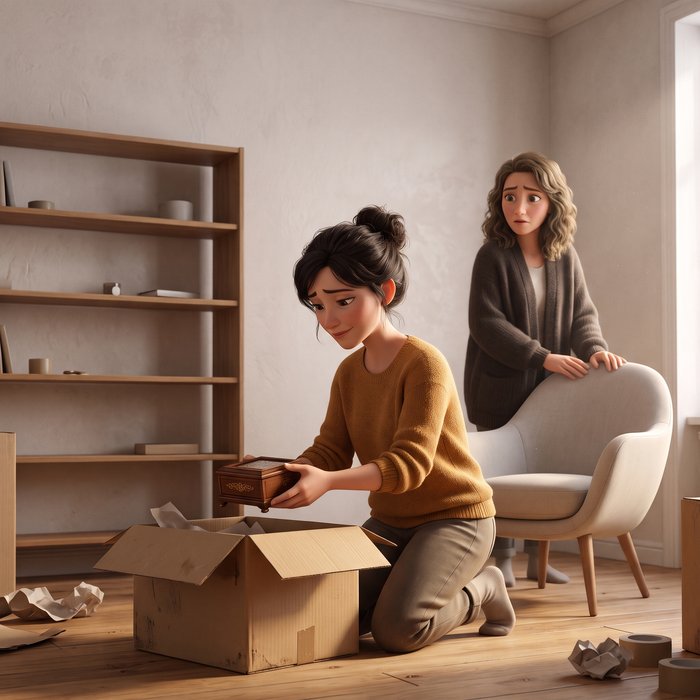
Later, I found her placing a small wooden music box into a cardboard container. Her grandmother had given it to her when she was a child. Clara loved it, but she said it did not fit the atmosphere she was trying to create. She planned to store it at her sister's house instead.
I asked why an object she loved had to be hidden. Clara admitted she had begun to feel embarrassed by anything that made her home look personal. Photographs and souvenirs seemed to interrupt the clean look she had seen online.
There is an irony here. Minimalism's commercial side sells baskets, storage systems, and expensive furniture to people who want to own less. The promise of freedom can become another shopping list. Even the absence of objects becomes a product to purchase and display.
Of course, there is nothing wrong with an uncluttered room. Some people feel calmer in simple surroundings, and others prefer owning little. The problem begins when a personal choice becomes a test of character. A crowded bookshelf does not prove a lack of discipline, nor does an empty one prove inner peace.
Clara eventually brought the music box home. She placed it beside a framed photograph and a ceramic bird from a market. The room still looked calm, but it also looked like hers. She had not abandoned minimalism; she had stopped treating it as a set of rules.
Perhaps the most useful question is not how few things we can own. It is whether the things we keep, and the things we remove, actually serve our lives. A home should make room for the person living in it, not turn that person into a caretaker for an aesthetic.
Fiction note: All people, places and events in this text are fictional.