When Millbrook Council announced that it would renumber several streets, residents were told the change would make deliveries and emergency visits easier. The old system had developed over decades: numbers skipped houses and jumped between sides of the road.
The council sent every household a letter explaining its new number. For three months, residents were asked to display both the old and new numbers. Unfortunately, not everyone received the letter.
Mrs Patel had lived at number 14 for thirty years. Her new number was 7. Across the road, Daniel's house changed from 7 to 12. The new sequence looked logical on the council's map, but it created confusion for anyone who still used the old addresses.
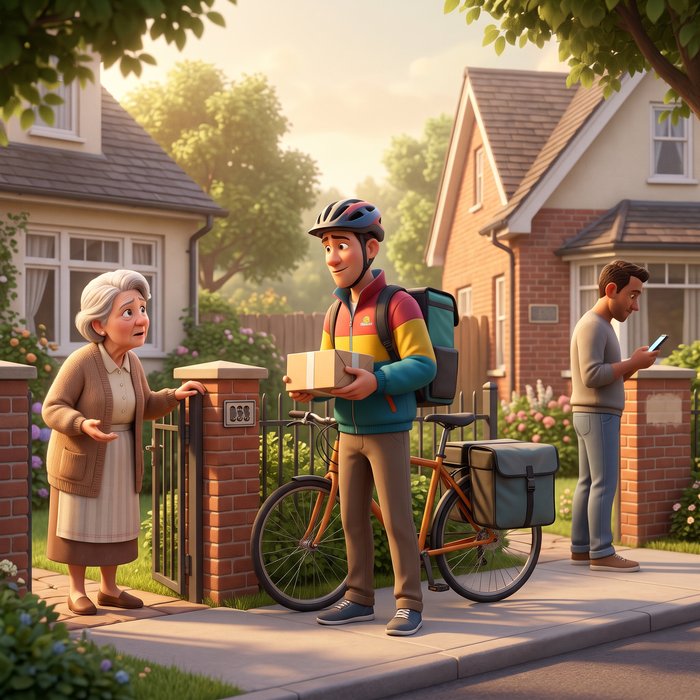
One Tuesday, a delivery cyclist arrived with a parcel addressed to Daniel at number 7. He saw the number 7 on Mrs Patel's gate and handed her the parcel. She signed for it before noticing that the label showed Daniel's name. The cyclist had simply matched the numbers correctly.
Mrs Patel called Daniel, who came over to collect his running shoes. He laughed at first, but then remembered that his elderly mother had a clinic appointment the following week. The clinic still had his old address on file, and he worried that a reminder or a taxi might go to the wrong house.
Daniel contacted the council. A staff member explained that services had been sent updated address lists, but not every organisation had changed its records. The council offered a temporary address-checking service for residents who were unsure which number to give.
Within days, neighbours began sharing stories of misplaced parcels and confused visitors. Some blamed the council for changing the numbers too quickly. Others said a transition period was always going to be awkward.
The council extended the period for displaying both numbers and reminded residents to update their details with doctors, banks, and delivery companies. Daniel also put a note on his gate explaining the new number.
By the end of the month, most deliveries were arriving at the right doors. The council learned that changing a number on a map was only the beginning. People and organisations needed time to catch up, too.
Fiction note: All people, places and events in this text are fictional.